
Do your students struggle with order of operations in Algebra? Integers? Absolute Value? Squares? Cubes? Fractions?
#1 – Order of Operations in Algebra
5 components of order of operations include the following mathematical components:
- 1. Integers: zero, negative, and positive numbers
- 2. Absolute Value: a description of the distance of a number from zero on a number line, and notated as |6| = a distance of 6 units from zero on either side of a number line.
- 3. Squares and Cubes: to square or cube a number and find the root of a squared or cubed number
- 4. Fractions: numbers and expressions in fraction form: 2 x 3 + 5/6 – 3. A number in fraction form may contain more than one operation. A specific order is required to simplify this type of fraction.
#2 – Integers and Absolute Value
Next, let’s dive deeper into the components of integers and absolute value. It is ideal to teach both concepts simultaneously, as they are closely related. Absolute value represents the distance of zero on the number line. A number line consists of both negative and positive numbers. As students measure the distance from zero to three, they discover negative numbers and yet understand that the distance is a positive number.
On the other hand, they begin to recognize the measurement of distance on the number line with integer problems, such as – 3 – 4, as the distance drops an additional 4 units, meaning that the final value results in – 7. To help students visualize this concept, I like to use a vertical number line and compare it to a thermometer. “It was 3 degrees below zero. It has now dropped another 3 degrees. The new temperature is -7 degrees.” Providing other similar examples and encouraging students to write their own stories is a pathway towards understanding.
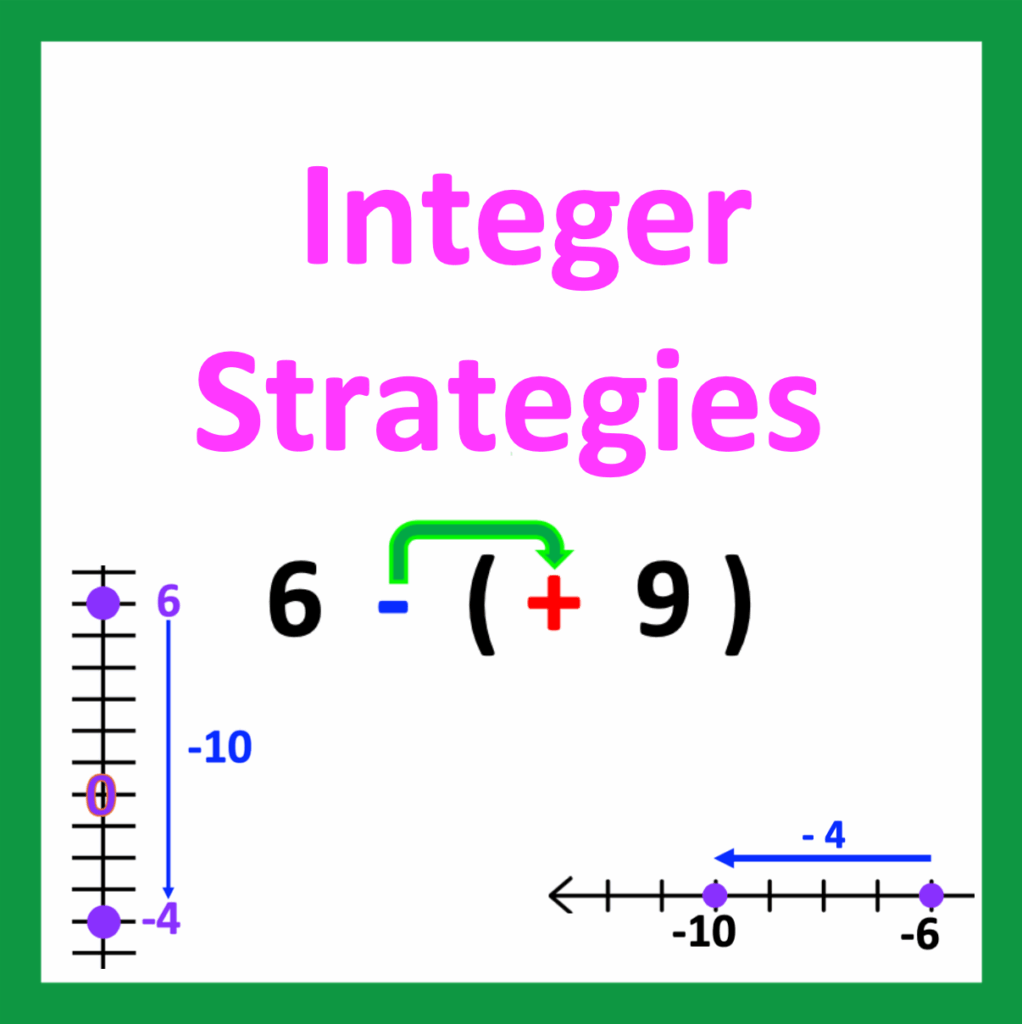
https://www.teacherspayteachers.com/Product/Integer-Strategies-Posters-and-Practice-11444768
#3 – Squares and Cubes
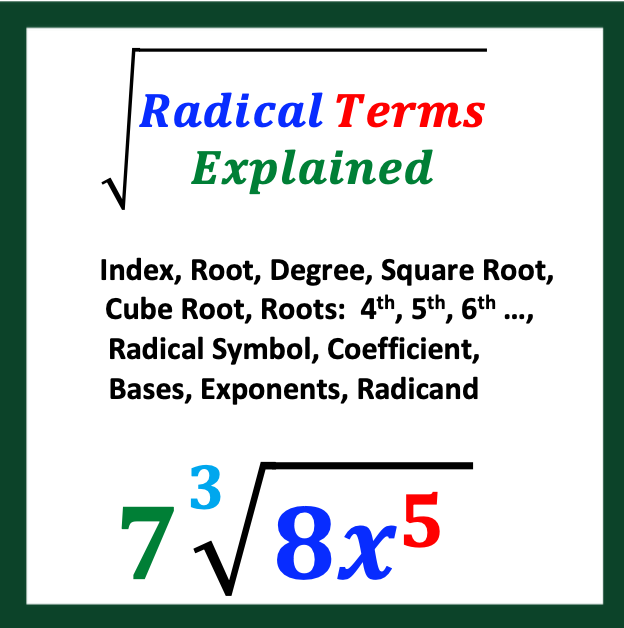
Furthermore, students need to have a thorough understanding of the terms used when squaring, cubing, or finding the root of a number. Terms and parts to identify and understand include:
- 1. base
- 2. exponent/index
- 3. radicand
- 4. radical symbol
#4 – Fractions
In addition, fractions and fractions as or within an expression significantly challenge students. This may be due to previous anxiety about fractions. It is also due to observing a fraction operation in the middle of other operations and multiple operations within the fraction itself.
Therefore, I highly recommend preparing students by reviewing fraction operations from the beginning of the school year prior to teaching order of operations that include fractions. I also recommend reviewing fraction operations to the end of the school year, as fractions continue to play significant roles in other future math concepts.

Conclusion
In conclusion, it is easy to see how students will benefit from well-defined and illustrated instruction on all 5 components of the order of operations. Other words of wisdom:
- 1. Begin basic fraction operation review immediately: add, subtract, multiply, and divide
- 2. Start small: provide practice problems that only include 2-3 steps or types of steps.
- 3. Avoid moving too fast from the length or type of order of operation. The more complex the operation or the number of steps within the operation, the more review time will be needed.
- 4. Provide continuous review throughout the school year to increase student confidence for more complex problems provided in the following school year.
Other Related Posts
Looking for More Materials?
Click the button below to view more of my educational resources!