
What is the weakest academic link in homeschool educational settings needed for transition to adulthood?
#1 – Mathematics: Confidence in Homeschool Math
Firstly, confidence in homeschool math is critical for kids to independently transition to adulthood. Math skills increase the ability to manage money wisely, know how to budget, and save as they consider other investments.
Likewise, kids need to know how to make change. Think about it. How many kids enter the workforce at coffee shops, discount stores, and other similar settings?
#2 – Test Results
Public School vs. Homeschool Statistics: A Comprehensive Analysis
Secondly, in Dr. Elka Jaboson-Pinson adds,
“Despite the overall performance of homeschooled students on standardized tests, there’s an interesting exception in mathematics:
Studies suggest that homeschooled students may perform lower in math compared to their public school counterparts, particularly in unstructured learning environments.
This finding highlights the importance of structured math instruction and may indicate an area where homeschooling families might need to pay extra attention or seek additional resources.”
#3 – What Could Boost Math Scores?
Thirdly, have you ever wondered if there was a special formula for boosting confidence in homeschool math, which would also prepare kids for adulthood? What if I told you that middle school is where it starts … or stops, depending how you look at it.
Therefore, what do I mean? Students must understand the basics before they move on to other topics, such as Algebra. Why? Math is a subject that, over the course of time, creates layers of understanding. Think of it like this: You walk before you run. Observe the layers of math understanding as listed below.
- 1. Add and subtract one to three-digit numbers with and without borrowing
- 2. State multiplication facts for numbers 0 – 11. Understand that the opposite of multiplication is division.
- 3. Accurately measure objects using whole and fractional numbers: Inches: 2, 2 1/2, 2 1/4, 2 1/8, 2, 1/16
Centimeters: 2, 2 1/10, 2 1/5, 2 3/10, … 2, 9/10. - 4. Add, subtract, multiply, and divide all types of fractions.
Likewise, you may look at this list and notice that other concepts are missing. You are correct. There are other topics that are missing.
However, I stop with fraction operations as this is the topic of greatest importance in middle school math that hinders success in other middle school topics and other high school-level math courses.
#4 – Full Circle
Furthermore, to be prepared for adulthood, kids will be most successful when they understand mathematical principles related to everyday life. Many of these principles are learned in middle school and later included in high school math courses. Fraction operations are significant to this understanding.
Are you using STEM or STEAM for science class? Remember, both include math principles. Don’t forget to include these.
For example, geometry and probability concepts include fractions. Personal Finance incorporates fractions and also requires the skill of converting between fractions, decimals, and percentages, such as calculating percent values on dollar amounts. Conversions and units of measure are practices commonly applied in Chemistry and Physics.
Is your teenager planning a career as a carpenter or architect? Math with fractions is of significant importance.
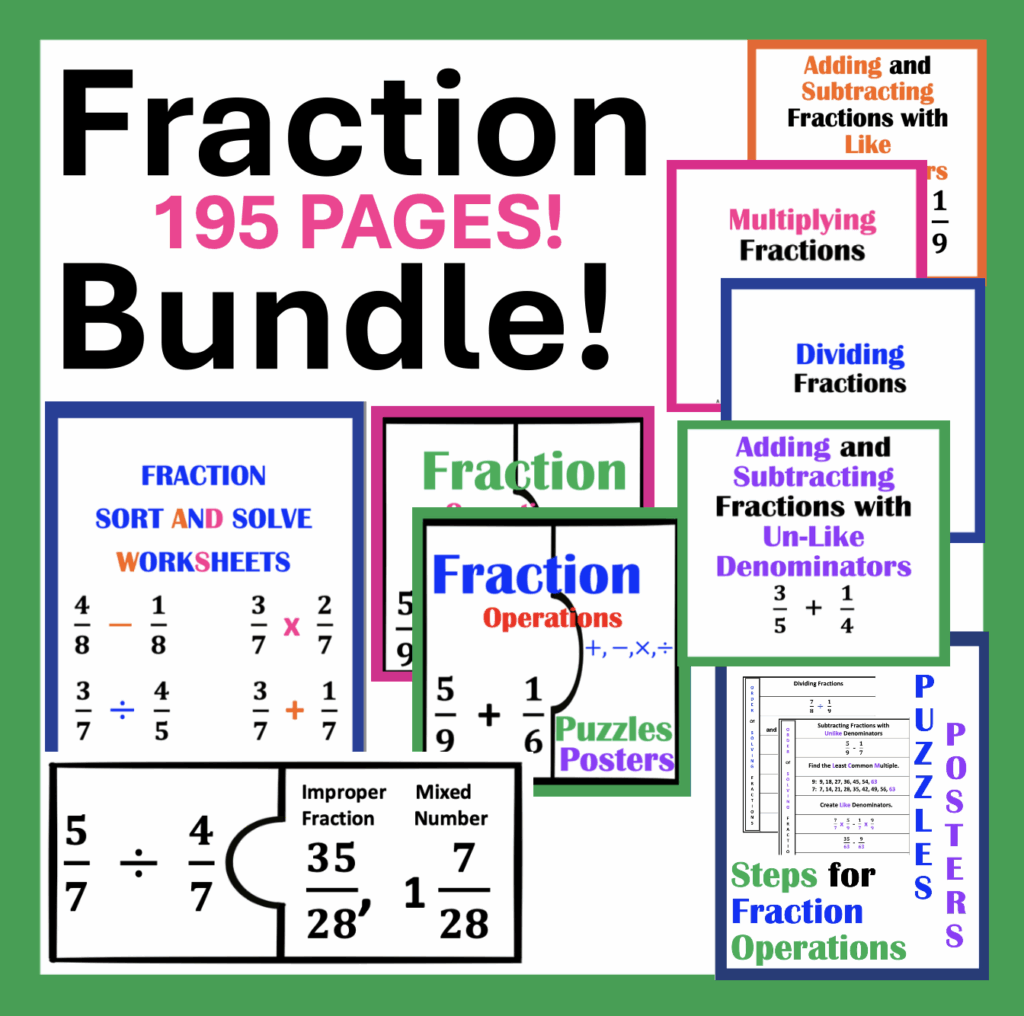
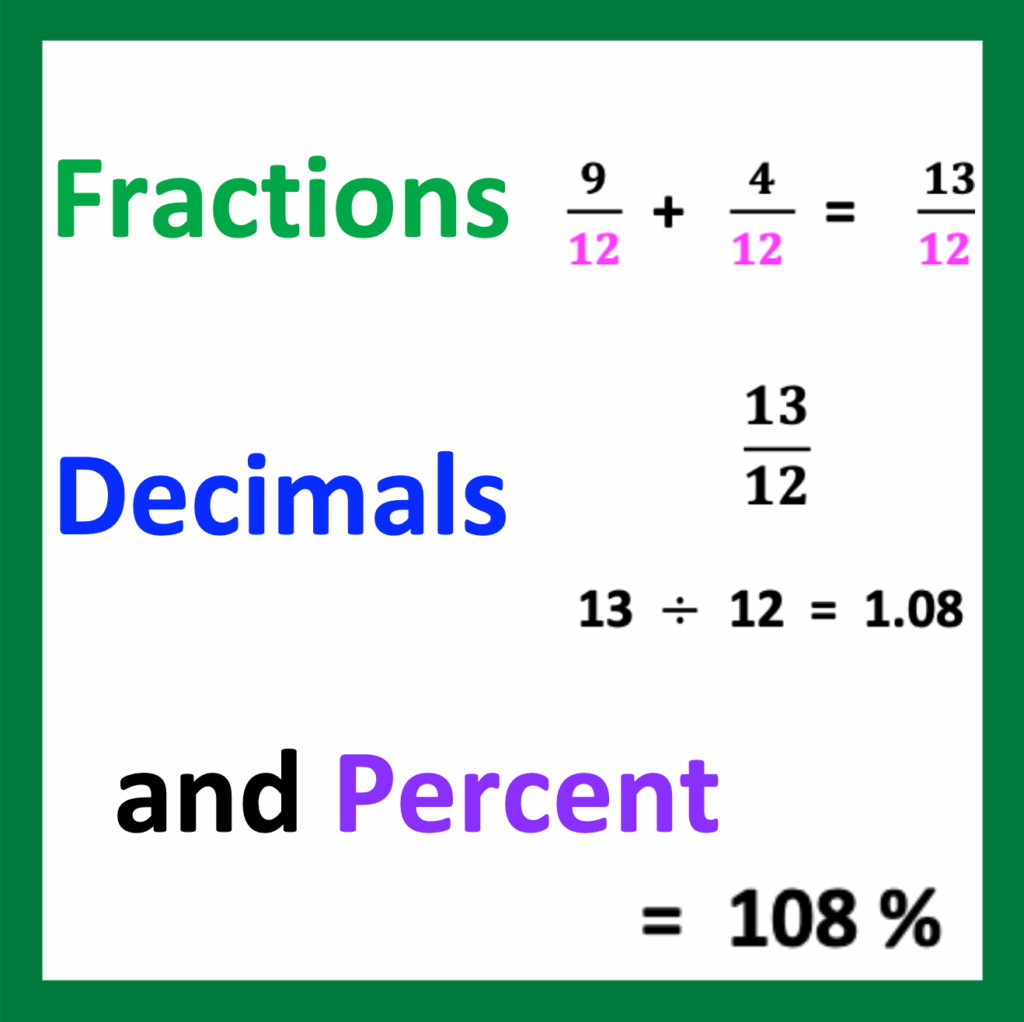
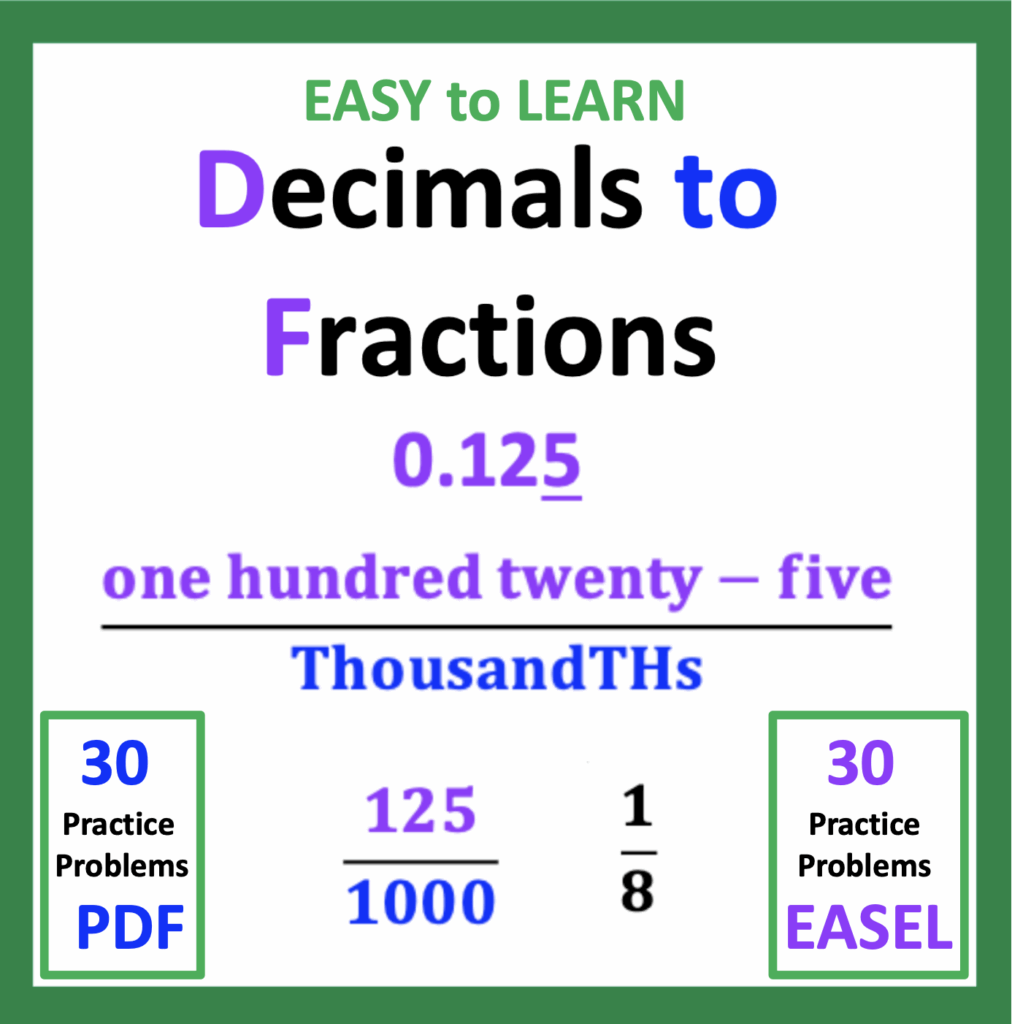
Furthermore, are you looking for fraction, decimal, and percent teaching/practice resources that are easy to use and understand? I’ve got you covered. The following resources include color-coded materials to make the learning experience come alive! Check it out.
Conclusion
In conclusion, though math may be the most challenging subject, understanding how it is applied to everyday life and future academic goals can motivate greater energy and time to pursue the subject effectively.
Be sure to see other posts on this and other related topics
Looking for More Materials?
Click the button below to view more of my educational resources!