
Do your students tire of practice review worksheets for fractions? Do your students also struggle to remember basic geometry formulas? Are you looking for hands-on activities? Keep reading to discover how to maximize fraction and geometry review.
#1 – Fraction and Geometry Review
Firstly, what if you could complete the fraction and geometry review simultaneously? Read on to discover strategies to make this possible.
#2 – Overlap Concepts in Fraction and Geometry Review
Now, let’s consider ways fraction operations and geometry concepts can be used with maximum effectiveness.
First, we know that geometry requires calculations to determine values for line segments, perimeter, and area. Second, numbers used in these calculations may include whole numbers, mixed numbers, proper and improper fractions.
Likewise, why not utilize fractional numbers in our line-segment, perimeter, and area problems? Combine these concepts, starting with a simple line segment, progressing to more complex shapes such as parallelograms. However, let’s consider other factors to best prepare for this adventure.
#3 – Preparation
A. Fraction and Geometry Review: Fractions on a Ruler
First, provide rulers to explain measurement. Compare and contrast the differences between inches and centimeters on a ruler. Point out the fractional parts between each whole number. Below are examples:
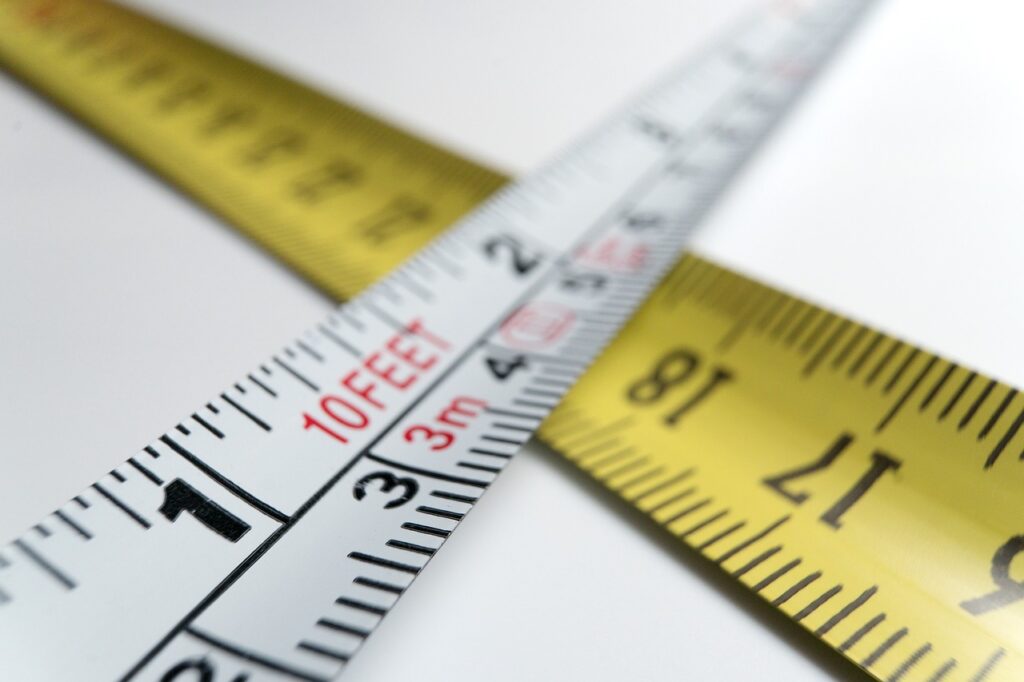
- 1. Inches: 1/2, 1/4, 1/8, and 1/16
- 2. Centimeters: 1/2 cm
- 3. When discussing centimeters, remind students that 1 cm = 10 mm: 1/10 mm, 2/10 mm, … 10/10 mm = 1 cm
B. Recommended Use in Fraction Operation Order
Second, when combining geometry concepts with fraction operations, include fraction operations in the following order:
- 1. Adding and Subtracting Fractions with Like Denominators: for line segments and perimeter
- 2. Multiplying Fractions: for area
- 3. Dividing Fractions: When finding a part of a whole
- 4. Adding and Subtracting Fractions with Unlike Denominators: for line segments and perimeter
Furthermore, when going through operations 1 – 4, you will want to include geometry problems that utilize fractions in the following order:
- 1. Proper fractions: 1/8 inches + 3/8 inches for a line segment
- 2. A whole number with a proper fraction: 2 inches + 1/4 inch for a line segment
- 3. A mixed number with a whole number: 3 1/8 inches + 5 inches for a line segment.
- 4. A mixed number with a proper fraction: 2 1/16 inches + 3/8 inch for a line segment
- 5. A mixed number with another mixed number: 4 1/8 inches + 3 5/8 inches for a line segment
#4 – Alternative and Hands-On Activities
Furthermore, once your students are familiar with measurement values on the ruler and the fractions represented, you are ready to differentiate alternative and hands-on activities for your students. Below are examples of alternative and hands-on activities:
- 1. Create student groups: Draw two line segments on the board. Ask students to draw similar line segments on paper. Assign different groups different fraction types. For example, if you want to find the total length of the line segment, Group A would use proper fractions with the same denominators. Group E would use mixed numbers with different denominators.
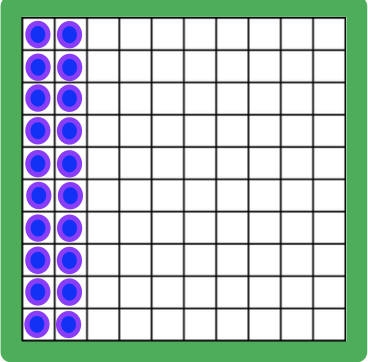
- 2. Students use a tape measure to determine the perimeter of the gym. Students return to the classroom and create a scaled-down equivalent, illustrated on graph paper.
- 3. Create student groups: Each student group will be given a specific square tile measurement. Each group must determine how many squares will be needed to complete a 12 ft x 12 ft space. Their findings must be illustrated on graph paper. For example, Group A may be given a tile of 12 square feet. Group E may be given a tile size of 3 1/2 inches square feet..
- 4. Draw any line segment or shape on the board to determine length, perimeter, and area. Label each part as a fraction. Begin with simple problems and progress to more challenging ones. Students copy the shape, parts, and calculate the length, perimeter, or area.
Conclusion
In conclusion, when fraction and geometry review are combined, you will maximize time and energy. Students will demonstrate increased confidence in math.
Looking for More Materials?
Click the button below to view more of my educational resources!