
Have you ever been in the middle of a great lesson presentation when you discover students do not know how to complete fraction operations as part of a new math concept?
#1 – What’s a High School Math Teacher to Do?
So what do you do? You desire to cover the new high school math information, though you also know that if students do not understand how to complete the fraction, the final answer will be inaccurate.
Furthermore, you anticipate that fractions will continue to apply to other concepts.
Keep reading to discover solutions for student challenges with fractions in high school math.
#2 – What to Review Before Fractions
In addition, it is important to consider other math skills that contribute to fraction challenges such as multiplication facts and the ability to list factors of numbers.
A. Quick Review of Multiplication Facts in High School Math
As mentied above, fluency with multiplication facts increases student ability to complete work and understand new concepts. The good news: students often remember the simple facts such as multiplying by 0, 1, 2, 5, 10 and 11. This leaves 3, 6, 7, 8, and 9. Focus on 3, 6, 7, 8, and 9. Instead of using flash cards, teach students relationships between numbers. Using such a method increases student buy in.
B. Factors of Numbers:
Likewise, teach relationship of numbers through the practice of listing factors. This approach not only helps students with multiplication facts, but makes way for student confidence when reducing fractions, and high school math concepts.
For example, consider other math concepts that incoorporate the listing of factors. The confidence listing factors 4 – 100 provides greater math ability factoring polynonials and simplifying radicals in Algebra. This skill has signficantly eased my students’ confidence and ability to solve such problems.
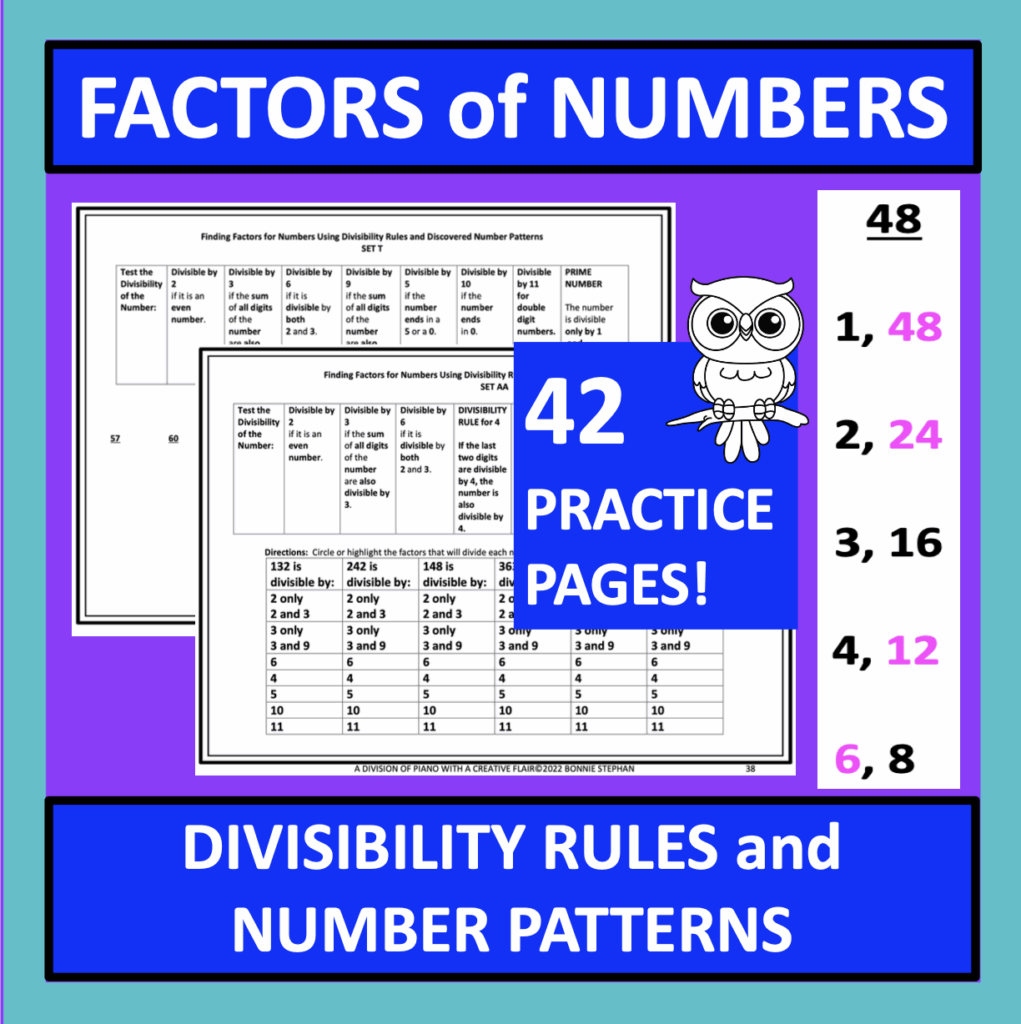
So, how do you create time and opportunity to include these skills? Include factor listing pages with divisibility rules with their regular homework.
Now, where can you find such a resource that includes easy to follow instructions and examples, print-and-go, answers included, and easy to follow? No worries. I’ve got that covered. Click the link located below this image for more information.
#3 – Order to Review Fractions in High School Math
Another strategy to consider is the order of reviewing fractions. Start simple. Use only proper or imporper fractions. This keeps students from becoming confused between types of problems. Teach operations in the following order, each operation type one day at a time. Some students may do best if each operation is covered a week at time. Continue reviewing operations throughout the year by incoorporating other math concepts such as probability, geometry, and others.
- 1. Addition and Subtraction with Like Denominators
- 2. Multiplication
- 3. Division
- 4. Addition and Subtraction with Unlike Denominators
Furthermore, consider the following:
- 1. Note that we begin with the easiest operations, addition and subtraction with like denominators. As we go down the list, 1 – 2 new concepts are included.
- 2. Prior to addition and subtraction with unlike denominators, introduce the least common multiple, not to be confused with the greatest common factor. Strategy: when listing factors of numbers, write factor pairs from
north to south. When writing LCM’s, write multiples from left to right. I tell my students to remember that least goes east.
#4 – Fractions with Mixed Numbers
Now that students understand basic operations for fractions, operations with mixed numbers may be included.
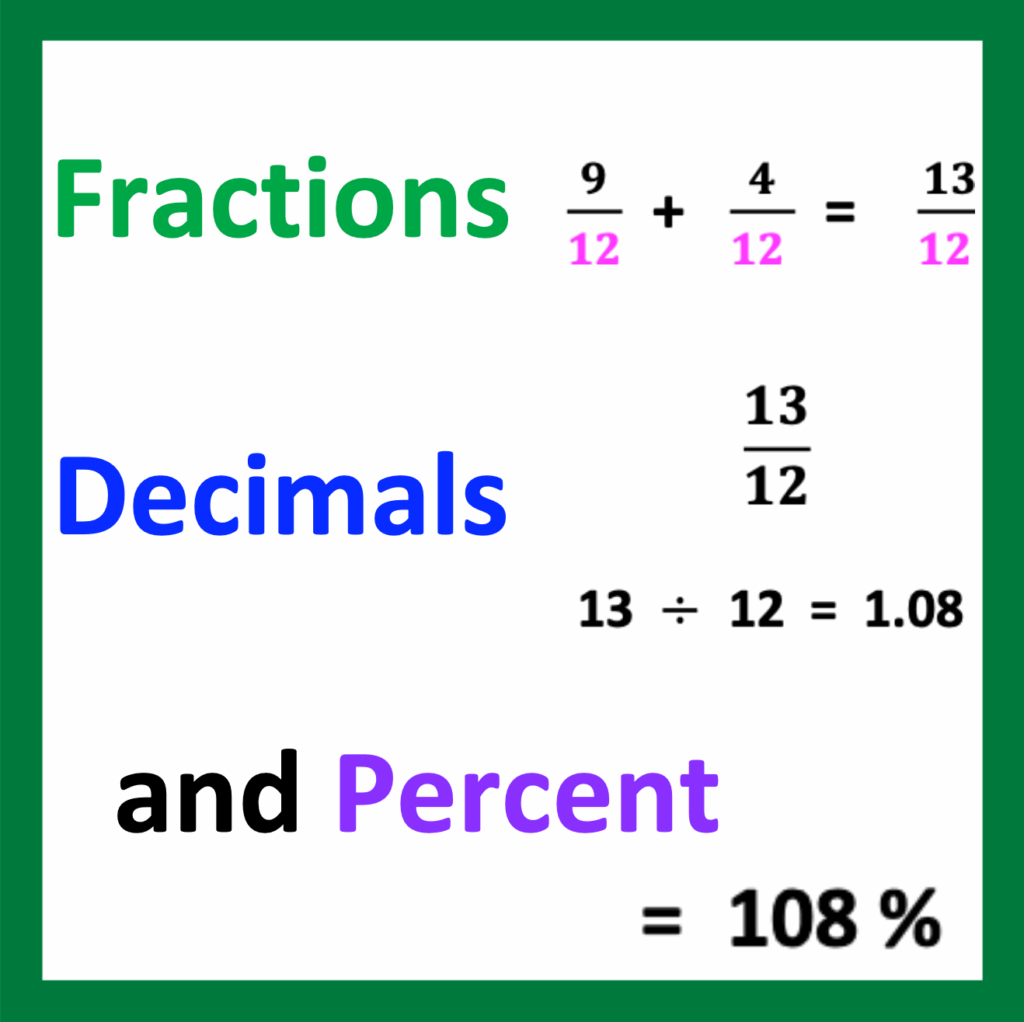
Are you looking for an easy resource to print-and-go to provide student practice. Click the link located below this image for more information.
Conclusion
In conclusion, it is always best to approach each new high school math class from the first day of class with fraction operation assessment and intervention from the front end that to find questions popping up in the middle of your instruction you worked so hard to prepare.
Other Related Posts
Looking for More Materials?
Click the button below to view more of my educational resources!