
As you prepare to teach math, do you sigh deeply and wonder how to meet all the standards and needs for your students? If so, you are not alone. Keep reading to discover strategies that will help meet student math needs.
#1 – Mixed Levels of Learners
First, we know that elementary, middle, and high school students represent a diversity of math abilities within their assigned grade. This contributes to significant challenges for teachers to meet student math needs of all students and the demands of administrators at all levels. Oh, the pressure!
Second, if I had the opportunity to recommend strategies for meeting student math needs, I would suggest the following:
- 1. Require administrators at the state level to teach a math class every two years for one semester to revisit the realities that teachers face every day, not to mention teaching all the required standards, resulting in average to above average test scores in math at the end of the year.
- 2. Allow teachers to teach their favorite subject at the elementary and middle school level. How many elementary teachers do you know who do not like to teach math? Could this explain math issues in middle school? High school?
- 3. Re-structure classroom settings. Student participates with other students at the same math level, regardless of age or grade. Talk about true diversity and the ability to meet all math needs!
On the other hand, I know that these ideas may sound extreme. Some gifted administrators support teachers at all levels. Some elementary teachers love teaching all subjects. I do, however, find it worthwhile to think outside of the box once in a while. That brings us back to where I started. What strategies can we use?
Emphasize the BIG IDEAS: Be the Stairsteps to the Next Level
#2 – Elementary Student Needs: Math Foundations
Furthermore, the foundations of math are developed during the elementary years. There are many wonderful, fun math concepts students may learn during these years. Most importantly, if you teach elementary school students, how wonderful it is when students can add and subtract at least two to three-digit numbers.
Last but not least, how exciting it is for middle school teachers to discover that all students know multiplication facts! If students understand that opposite operations undo each other, that is another win, such as the opposite of multiplication is division!
#3 – Middle School Student Needs: Fractions, Decimals, and Percent
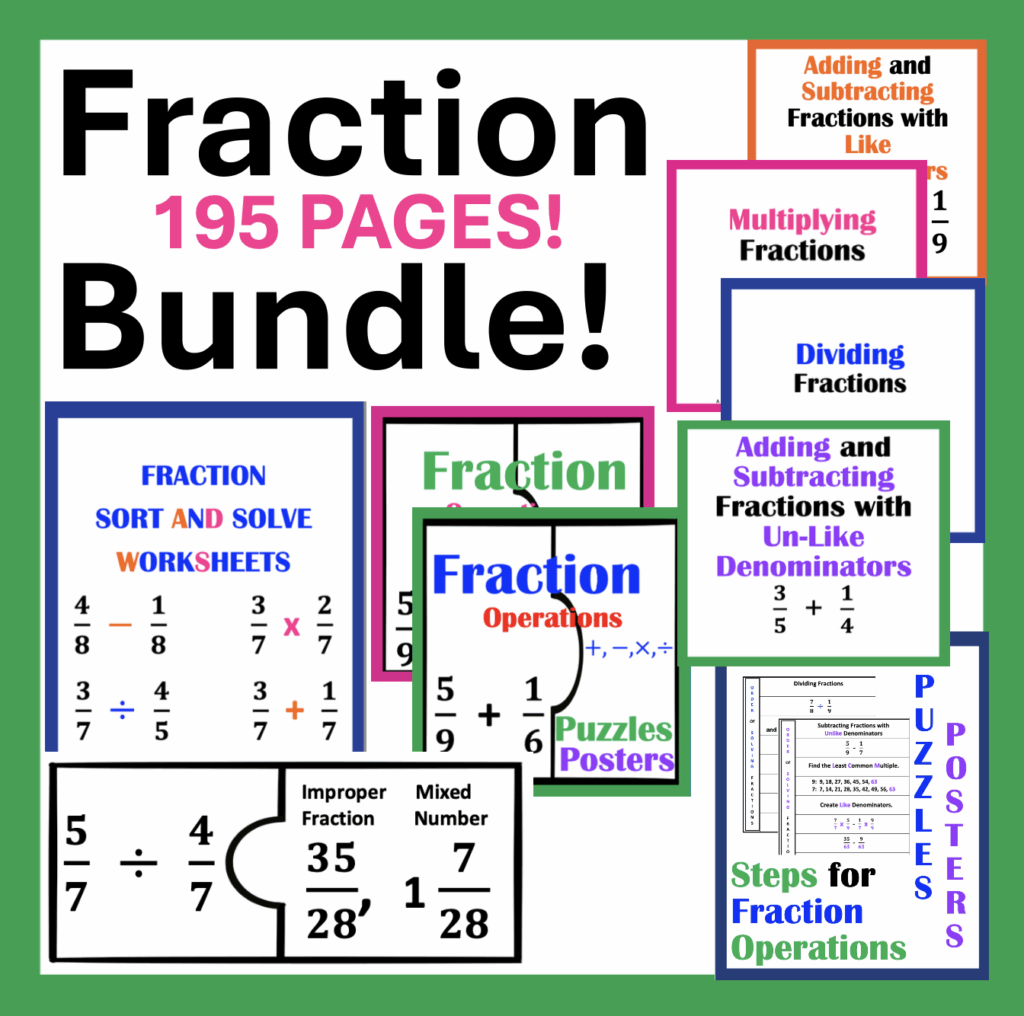
Likewise, middle school students will build on the math foundations established in elementary school. From my perspective, if students enter my algebra class with the ability to complete all fraction operations, convert between fractions, decimals, and percentages, I would be ecstatic! You might even hear biology and chemistry teachers rejoicing!
#4 – High School Student Math Needs
In addition, there are two basic math needs for high school students.
A. College Prep
Though many schools provide specific course requirements for students on the college prep track, it is just as important that these students do not merely “barely” pass. We need to ensure that they clearly understand the concepts covered from Algebra 1 to Pre-Calculus. Some schools do a great job supporting students through peer tutoring during and after the regular school day. I have also worked with teachers who come in before school starts to be available to students with questions.
Furthermore, having worked in a math lab at a community college, I observed students who dropped out of college due to being overwhelmed by the math requirements. Let’s keep our high school students academically supported, motivated, and determined as they progress through college-prep high school math classes.
B. Personal Finance: Student Math Needs
Furthermore, I cannot say enough about the importance of requiring ALL students to take a personal finance class. Below, I have listed 5 important basic concepts.
- 1. The impact of credit card interest and other cumulative interest costs
2. The impact of saving
3. Budgeting: Daily, weekly, monthly, yearly, and potential unplanned expenses
4. How to determine a want from a need
5. Strategies for paying less for more
Other topics could include planning for major purchases, such as buying a house. Taxes and investing are other topics. It is also important to provide students with recommended sources for further assistance, particularly for those students who struggle with math concepts. To support these students, I recommend sources that may be additional supports for making more complex financial transactions, such as filing taxes.
Conclusion
In conclusion, it is important to remember that we are all in this together. When emphasizing the big ideas, we increase the likelihood of math success as our students graduate prepared to be courageous and successful young adults.
Looking for More Materials?
Click the button below to view more of my educational resources!